

Start Boxing at Home: Beginner-Friendly Workout for Weight Loss
Looking for an exciting, effective, and beginner-friendly way to lose weight and boost your cardio fitness — without setting foot in a gym? Boxing at home might be exactly what you need. Boxing workouts are more than just throwing punches. They're dynamic full-body routines that improve cardiovascular endurance, build strength, torch calories, and relieve stress. Plus, you don't need expensive equipment or prior experience to get started!
In this comprehensive guide, you’ll discover everything you need to start a beginner-friendly boxing workout routine at home—from essential techniques and equipment, to sample routines, tips, common mistakes, and answers to frequently asked questions. Whether your goal is weight loss, enhanced mental health, or overall fitness, home boxing can help you reach it—all while having fun.
Why Boxing is Great for Weight Loss and Cardio Fitness
Boxing isn’t just a sport for professional athletes. It’s now a popular home workout choice because of its myriad health benefits—especially for weight loss and cardio fitness. Here’s what makes boxing so effective:
- High Calorie Burn: A single boxing session (30-45 minutes) can burn 400-700 calories or more, depending on your intensity.
- Full-Body Engagement: Boxing targets your core, shoulders, arms, back, legs, and cardiovascular system—making it a comprehensive workout.
- HIIT-Style Benefits: Many boxing routines use interval training (high intensity followed by short rests), which is proven to boost fat loss and improve heart health.
- Improves Coordination and Mobility: Learning punches and footwork enhances balance, reaction time, and body awareness.
- Mood Booster: Boxing relieves stress and releases endorphins, helping you feel energized and positive.
- Scalable for All Levels: You can adjust intensity, complexity, and duration—making boxing equally suitable for beginners and advanced athletes.
Benefits of Starting Boxing Workouts at Home

Home-based boxing workouts are gaining popularity for their convenience and accessibility. Here’s why starting your boxing journey at home can be a game-changer:
- Cost-Effective: Save on expensive gym memberships and equipment.
- Flexible Schedule: Workout at your own pace and when you have time.
- No Commute: No need to travel to a gym—exercise from your living room, backyard, or garage.
- Privacy & Comfort: Learn new skills without feeling self-conscious.
- Efficient Use of Time: Quick setup, minimal equipment, and no waiting for machines make for a streamlined routine.
What You Need to Start Boxing at Home
Minimal Equipment Needed
You don’t need a full-size boxing ring or expensive gear to get started. Here’s a breakdown of what’s essential—and a few extras to level up your workout:
| Essential | Nice-to-Have |
|---|---|
|
|
Tip: You can start boxing routines shadowboxing (throwing punches in the air) with zero equipment and still get an amazing workout.
Boxing Basics: Techniques Every Beginner Should Learn
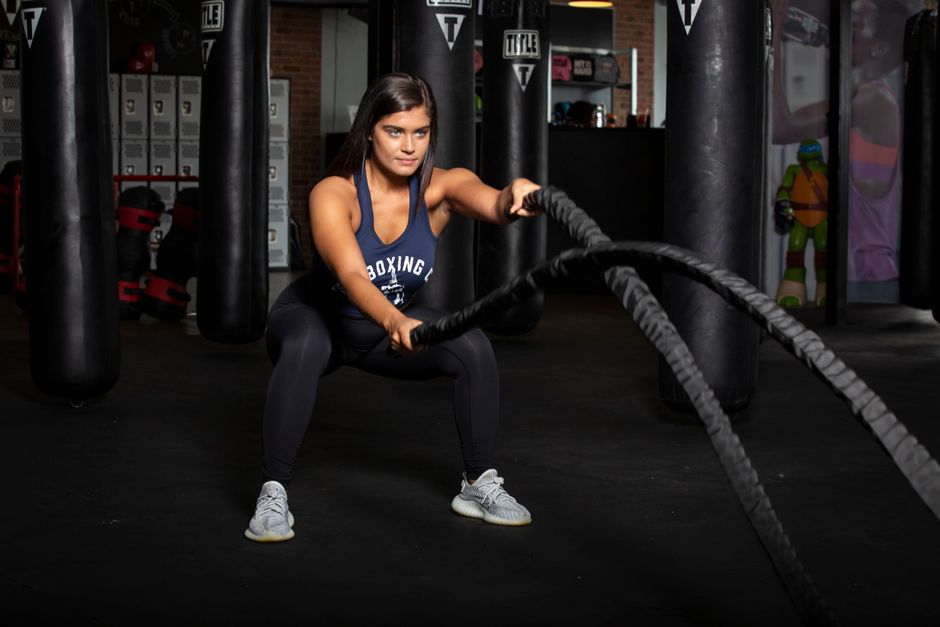
Boxing Stance
Your stance is the foundation. A solid boxing stance keeps you balanced, agile, and ready to move or punch. Here’s how to get into position:
- Stand with feet shoulder-width apart, knees slightly bent.
- If you’re right-handed (orthodox stance): left foot forward, right foot back at a 45° angle.
- If left-handed (southpaw stance): right foot forward, left foot back at a 45° angle.
- Distribute your weight evenly between both legs.
- Keep your hands up—dominant hand by your chin, lead hand slightly in front of your face.
- Chin tucked, elbows close to your ribs, shoulders relaxed.
Boxing Punches
Mastering these four basic punches is key before advancing to combinations:
- Jab (1): Quick, straight punch with your lead hand. Used for distance, setups, and defense.
- Cross (2): Powerful, straight punch thrown with your rear hand, crossing your body’s center.
- Hook (3 or 4): Circular punch thrown with either hand to the side of your opponent’s head or body.
- Uppercut (5 or 6): Upward punch thrown with either hand, targeting the chin or torso.
Tip: Always rotate from your hips and pivot your feet for power. Keep your non-punching hand up to protect your face.
Basic Footwork
- Step Forward/Backward: Move with small steps, always pushing off your back foot when stepping forward, and front foot when stepping back.
- Side Step: Step laterally to maintain angles, keeping your stance intact.
- Pivot: Rotate your lead foot and hips to change direction or create space.
Good footwork lets you attack, defend, and move smoothly between combinations.
Beginner-Friendly Boxing Workout Routine for Weight Loss
How to Structure Your Boxing Workout
Boxing routines typically blend punching technique, cardio intervals, and core/strength work. Here’s a format you can use at home:
- Warm-Up: 5-10 minutes
- Boxing Technique/Shadowboxing: 10-15 minutes
- Cardio Intervals (jump rope/punch combos): 10-15 minutes
- Strength/Core Circuit: 10 minutes
- Cool Down & Stretch: 5 minutes
Sample Beginner Boxing Workout (30-40 Minutes)
Here’s a step-by-step beginner routine you can follow. Adjust the duration/intensity to your current fitness level.
-
Warm-Up (5-10 Minutes)
- Jumping jacks (1 min)
- Arm circles (30 sec each direction)
- Jog in place or high knees (2 mins)
- Bodyweight squats (1 min)
- Torso twists (30 sec)
- Shadowboxing, light (2 mins)
-
Boxing Drills and Shadowboxing (10 Minutes)
- 30 sec: Jab (1) only, moving forward and back
- 30 sec: Jab + Cross (1-2) combo
- 30 sec: Hook practice (lead/rear)
- 30 sec: Uppercut practice (lead/rear)
- 1 min: Freestyle shadowboxing (mix the punches, slip, move)
- Repeat 2-3x, resting 30 sec between rounds
-
Cardio HIIT Intervals (10 Minutes)
- 30 sec: Fast straight punches (in the air or on a heavy bag)
- 30 sec: Jump rope (or pretend, hopping in place)
- 30 sec: 1-2-3 combo (jab, cross, lead hook)
- 30 sec: Squat jumps
- Repeat sequence for 2-3 rounds
-
Core Finisher (5 Minutes)
- Russian twists with or without weight (1 min)
- Leg raises (1 min)
- Plank hold (1 min)
- Bicycle crunches (1 min)
- Mountain climbers (1 min)
-
Cool Down (5 Minutes)
- Light shadowboxing (1 min)
- Gentle stretching: hamstrings, quads, shoulders, chest
- Focus on deep, slow breathing to recover
Weekly Progression Plan for Beginners
| Week | Sessions/Week | Main Focus |
|---|---|---|
| 1-2 | 2-3 | Form, stance, punches, footwork |
| 3-4 | 2-4 | Combos, increased rounds, intensity |
| 5+ | 3-4 | Longer sessions, new combos, more HIIT |
Start with shorter sessions (20-30 min) and gradually increase duration and frequency as you build stamina.
Pro Tips to Maximize Weight Loss and Cardio Benefits
- Maintain short rests between rounds to keep your heart rate elevated.
- Focus on perfect form before increasing speed or power.
- Use a fitness tracker or app to monitor your interval times and progress.
- Change up your combos every few weeks to challenge new muscles and prevent plateaus.
- Incorporate strength moves (push-ups, bodyweight squats, lunges) between combos for extra calorie burn.
- Pair boxing workouts with a balanced, healthy diet for best results.
Pros and Cons of Home Boxing Workouts
| Pros | Cons |
|---|---|
|
|
Common Beginner Mistakes (and How to Avoid Them)
- Neglecting Warm-Up: Cold muscles are prone to injury. Always spend 5-10 minutes warming up dynamically.
- Overextending Punches: Throwing punches with locked elbows or from the shoulder (not hips) can lead to injury. Focus on short, sharp movements powered by your core.
- Dropping Hands: Beginners often lower their guard when tired. Train yourself to keep your hands up—even when fatigued.
- Poor Footwork: Don’t cross your feet or plant them too wide/narrow. Practice moving smoothly between punches.
- Training Too Hard, Too Soon: Build stamina and confidence by pacing yourself and resting as needed.
- Ignoring Rest Days: Recovery is key. Don’t work the same muscle groups intensely every day; 2-4 sessions a week is plenty for beginners.
Advanced Tips to Take Your Boxing Routine to the Next Level
- Integrate Footwork Drills: Add ladder or cone drills to improve agility and coordination.
- Learn Slip/Weave/Defense Moves: Practice slipping (sideways), ducking, and weaving to build real-world skill and up intensity.
- Try Punch Mitts or Partner Drills: If you have a training partner, add focus mitt drills for reaction speed and accuracy.
- Use Interval Timers Like a Pro: Configure your workouts in 2 or 3-minute rounds, mimicking real boxing rounds, with set rest periods.
- Mix in Plyometrics or Sprints: Alternate rounds of boxing with explosive moves (burpees, jump squats, sprints) to boost calorie burn.
- Challenge Yourself With Heavy Bag Rounds: Invest in a heavy bag for resistance, power, and a fresh cardio challenge.
- Track Your Progress: Record rounds, combos learned, heart rate, and improvements week by week.
FAQ: Beginner Boxing at Home for Weight Loss and Cardio
Do I need any experience before starting boxing at home?
No experience is necessary! Home boxing routines are designed for all levels. Begin with the fundamentals outlined above. Consider following video tutorials for extra visual guidance.
Can I really lose weight with boxing workouts?
Absolutely. Boxing’s fast pace and full-body action burn significant calories, especially when paired with a balanced diet. With consistency (2-4 times per week), you’ll notice results in stamina, muscle definition, and body fat reduction.
How long does it take to see results?
Many people see initial improvements in energy, mood, and endurance after just 2-3 weeks. Visible weight loss or muscle changes typically emerge after 4-6 weeks of regular training and healthy eating.
Can I do boxing if I’m not fit or overweight?
Yes! Boxing is fully scalable. Start at your own pace. Modify movements as needed, and gradually build up as your fitness improves. Consult your doctor before beginning any new exercise routine if you have medical concerns.
How many times per week should I box?
2-4 sessions per week is ideal for most beginners—allowing for recovery and progress without burnout.
Should I invest in a heavy bag or gloves?
Optional. Shadowboxing is extremely effective for beginners. If you enjoy the workouts, consider adding gloves, wraps, and a heavy bag to deepen your practice. Check your budget and available space.
What if I live in an apartment? Will it be too noisy?
Shadowboxing and floor drills are typically quiet. Jumping, footwork, or heavy bag use may cause some noise—work out during the day and use mats/rugs to reduce sound if needed.
How do I know if my form is correct?
Practice in front of a mirror or record yourself to check stance, guard, and punch technique. Consider taking a few beginner classes (in person or virtual) for feedback.
Can I box at home without hurting my joints?
Warm up, use proper technique, avoid overextending, and gradually build intensity. Boxing is a low-impact cardio option when done with good form; listen to your body and rest if you experience pain.
Putting It All Together: Your Boxing Journey Starts Now
Boxing is more than just a workout—it's a powerful, engaging, and accessible way to lose weight, transform your fitness, and add energy to your daily life. With the beginner-friendly home routine outlined above, you can get started today using only your body, determination, and a little bit of space. Remember to master the basics, progress at your own pace, and celebrate each milestone along the way.
Ready to punch your way to a fitter, healthier you? Lace up those shoes, get into your stance, and throw that first jab. Your new favorite workout routine awaits!
Final Words: Stay Motivated and Consistent
Consistency is key. Schedule your boxing sessions just like any important appointment. Mix up combos, try new drills, and enjoy every round. Whether your goal is weight loss, cardio, confidence, or a little stress relief—home boxing has something for everyone.
Helpful Resources to Continue Your Progress
- Beginner Boxing YouTube Channels: “FightCamp,” “Precision Striking,” “Boxing Fitness Academy”
- Interval Timer Apps: Seconds Pro, Boxing Timer, Fight Timer
- Online Boxing Classes: Many gyms now offer virtual or on-demand classes. Try offerings by TITLE Boxing, Rumble, or local studios.
- Fitness Communities: Join fitness groups online for motivation and accountability.
Disclaimer: Always consult a physician before starting any new exercise program, especially if you have existing medical conditions or injuries.
Related Topics
- Essential Boxing Gear You Need to Start Your Home Workout
- Step-by-Step Guide: Your First 30-Minute Boxing Cardio Routine
- How Shadowboxing Boosts Weight Loss and Improves Stamina at Home



0 Comments