

Beginner Resistance Band Upper Body Workout at Home Guide
Looking for an effective way to build strength and tone your upper body at home, but intimidated by traditional weights? Resistance bands are the perfect solution for beginners. In this definitive guide, you'll discover a step-by-step approach to creating your own upper body resistance band workout routine. Whether you want to boost muscle tone, increase strength, or simply bring versatility to your at-home fitness, this guide is packed with actionable advice, beginner-friendly demonstrations, and expert tips to help you achieve results safely and efficiently.
Why Choose Resistance Bands for Upper Body Workouts?
- Beginner-friendly: Light, simple to use, and low risk of injury compared to free weights.
- Versatile: Engage different muscle groups using one tool.
- Portable: Lightweight and easy to store, making them ideal for home use or travel.
- Cost-effective: More affordable than most gym equipment.
- Adaptable: Easily adjust intensity by changing the band or modifying grip and stance.
What Are Resistance Bands?

Resistance bands are elastic bands designed to provide external resistance during exercise. Originally popular in physical therapy, resistance bands have become a mainstream tool for strength training. They come in various lengths, thicknesses, and resistance levels. Some common types include loop bands, tube bands with handles, figure-eight bands, and therapy bands. Each offers a slightly different experience, but all can effectively target upper body muscles.
Types of Resistance Bands
| Type | Description | Best For |
|---|---|---|
| Loop Bands | Continuous flat loops of latex, available in mini or large sizes. | Upper/lower body, glutes, multi-muscle workouts |
| Tube Bands with Handles | Elastic tubes, often with grips on both ends. | Upper body exercises, chest/back/shoulders |
| Therapy Bands | Flat, wide latex bands with no loop or handle (cut to length). | Rehabilitation, gentle muscle activation |
| Figure-eight Bands | Short bands in the shape of an "8" with built-in handles. | Arm and shoulder isolation moves |
Benefits of Resistance Band Upper Body Workouts
- Improve joint health - Low-impact movements protect your joints while still building muscle.
- Boost muscular endurance - Continuous tension challenges your stamina.
- Recruit stabilizer muscles - Resistance bands force smaller muscles to activate, increasing all-around strength.
- Foster better mind-muscle connection - Slower, controlled reps with bands help you "feel" every muscle working.
- Perform anywhere - No need for a gym or bulky equipment at home.
Are Resistance Band Workouts Effective for Strength and Toning?
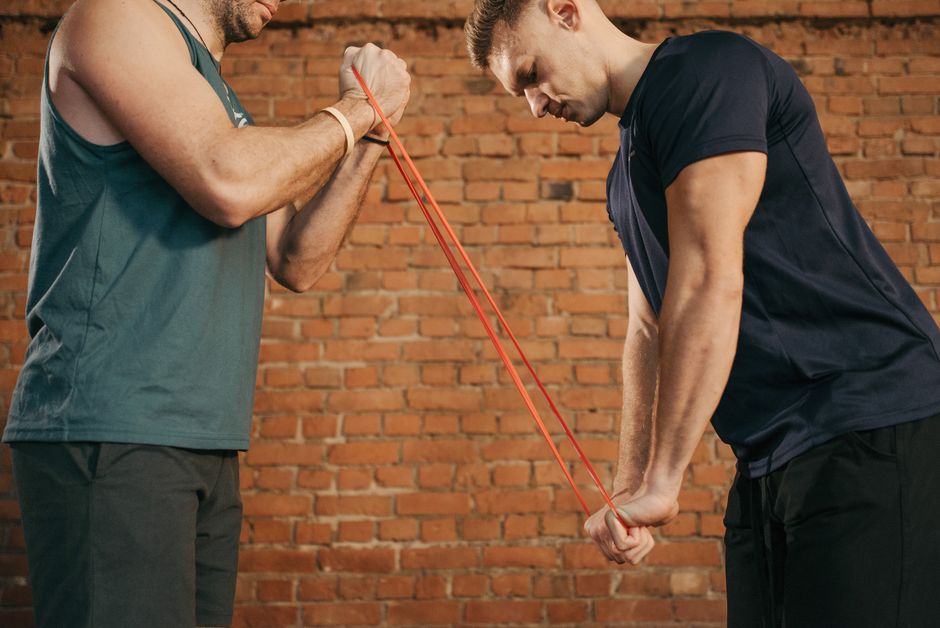
Absolutely! Research shows that resistance band training offers comparable muscle activation and gains to free weights—especially for beginners. Bands create “variable resistance,” meaning the tension increases through the movement, forcing your muscles to work harder at certain points. Whether your aim is muscle definition, strength gains, or improved balance and posture, resistance band workouts can efficiently deliver results.
How to Get Started: Key Preparation Steps
- Choose the right band: Start with a light to medium resistance band. Too much resistance can compromise form.
- Clear your workout space: Find a spot with enough room to stretch your arms out wide in all directions.
- Warm up properly: Light cardio (marching in place, arm circles) prepares your body and helps prevent injuries.
- Dress comfortably: Wear clothes that allow full range of motion and supportive sneakers.
- Set your goals: Decide if you’re working on overall toning, muscle strength, or both. This will guide your routine.
Sample Warm-Up Routine (5 Minutes)
- Arm circles (forward and backward) – 1 minute
- Shoulder shrugs – 30 seconds
- Dynamic chest opener (arms swing wide) – 1 minute
- March in place, raising knees high – 1 minute
- Wrist rolls and gentle neck rotations – 1 minute
- Band pull-aparts (optional, light tension) – 30 seconds
Beginner Resistance Band Upper Body Workout Routine
This beginner routine targets all major upper body muscles: chest, back, shoulders, biceps, triceps, and upper back. Perform two to three sets of each exercise, resting 30–60 seconds between sets.
1. Resistance Band Chest Press
- Anchor the band behind you (closed door or sturdy object).
- Hold a handle in each hand, position arms at chest height, elbows bent.
- Press hands forward together until arms are extended, keeping tension in the chest.
- Slowly return to starting position.
- Reps: 12–15
2. Resistance Band Row
- Sit or stand with legs extended, secure the band under your feet.
- Hold handles/palm ends, arms extended in front.
- Pull hands towards your ribcage, squeezing shoulder blades together.
- Release with control.
- Reps: 12–15
3. Resistance Band Shoulder Press
- Stand on the band with feet hip-width apart.
- Hold handles at shoulder height, elbows bent.
- Press hands overhead until arms are extended.
- Lower with control.
- Reps: 10–12
4. Resistance Band Lat Pull Down
- Hold the band overhead, hands wider than shoulders.
- Pull the band down, bringing elbows towards your ribs.
- Squeeze upper back at the bottom.
- Return to start.
- Reps: 10–12
5. Resistance Band Bicep Curl
- Stand on the middle of the band, feet hip-width.
- Hold handles at your sides, palms facing forward.
- Curl hands towards shoulders, keeping elbows by your side.
- Lower slowly.
- Reps: 12–15
6. Resistance Band Overhead Tricep Extension
- Stand on one end of the band, hold the other end with both hands behind your head.
- Extend arms upwards, keeping elbows close to ears.
- Lower back to start with control.
- Reps: 10–12
7. Resistance Band Face Pull
- Anchor band at upper chest height.
- Grasp ends, arms extended forward, palms face down.
- Pull band towards your face, elbows out, squeezing shoulder blades.
- Release with control.
- Reps: 12–15
Sample Beginner Resistance Band Upper Body Routine Table
| Exercise | Muscle Group | Sets | Reps | Rest (seconds) |
|---|---|---|---|---|
| Chest Press | Chest, Shoulders, Triceps | 2–3 | 12–15 | 30–60 |
| Row | Back, Biceps | 2–3 | 12–15 | 30–60 |
| Shoulder Press | Shoulders, Triceps | 2–3 | 10–12 | 30–60 |
| Lat Pull Down | Latissimus Dorsi, Upper Back | 2–3 | 10–12 | 30–60 |
| Bicep Curl | Biceps | 2–3 | 12–15 | 30–60 |
| Overhead Tricep Extension | Triceps | 2–3 | 10–12 | 30–60 |
| Face Pull | Rear Delts, Upper Back | 2–3 | 12–15 | 30–60 |
Adjusting the Routine for Your Goals
- For Strength: Use a thicker band, increase rest between sets (60–90 seconds), and target 6–10 reps per set.
- For Toning/Endurance: Lighter band, less rest (30–45 seconds), and aim for 12–20 reps per set.
- For Balanced Progress: Alternate between heavier and lighter bands from week to week.
Common Beginner Mistakes With Resistance Bands
- Using too much resistance: Leads to poor form and potential injury.
- Letting tension drop: Always maintain some stretch in the band to keep muscles engaged.
- Fast, jerky movements: Move slow and controlled to maximize the muscle-building effect and safety.
- Incorrect anchoring: Make sure the band is securely fixed to avoid snapping back.
- Poor posture: Don’t let shoulders round forward or arch your back. Core tight throughout every move.
- Insufficient warm-up or cool-down: Always include mobility and stretching to reduce injury risk.
Advanced Tips to Maximize Your Band Workouts
- Combine bands: Use two bands for increased resistance as you progress.
- Slow down the eccentric phase: Focus on the lowering part of the movement for added muscle challenge.
- Try “drop sets”: Start heavy, then quickly switch to lighter bands for higher reps without a break.
- Increase time under tension: Pause for 2–3 seconds at the hardest part of each rep.
- Introduce single-arm/uni-lateral moves: This uncovers weak points and enhances stability.
- Change grip/stance: Wider/narrower grips, split stance, or kneeling positions create new muscle challenges.
Cool Down and Recovery
- Stretch: Hold each stretch for at least 30 seconds (chest opener, triceps, shoulders, back).
- Hydrate: Drink water before and after your workout to support muscle recovery.
- Rest: Give your upper body at least 48 hours before training the same muscle groups again.
How Often Should Beginners Train With Resistance Bands?
For best results, perform this upper body routine 2–3 times per week on non-consecutive days (e.g., Monday, Wednesday, Friday). Allow sufficient rest for muscle repair and growth. As you gain experience, you can add more sets, increase frequency, or try new exercises.
Progressing Your Resistance Band Upper Body Workout
- Increase resistance: Move up to heavier bands as you get stronger.
- Add reps or sets: Gradually increase reps (aim for up to 20) and then add an extra set.
- Shorten rest periods: Keep rest between sets below 30 seconds for more intensity.
- Combine with lower body/core routines: For full-body fitness, add squats, banded glute bridges, or band ab twists on alternate days.
Pros and Cons of Resistance Band Upper Body Workouts
| Pros | Cons |
|---|---|
|
|
Frequently Asked Questions (FAQ)
How long will it take to see results using resistance bands?
With consistent training 2–3 times per week and proper nutrition, many beginners notice some toning and slight muscle gains in 4–6 weeks, and more visible changes after 8–12 weeks.
Can I build muscle with resistance bands only?
Yes. Resistance bands create tension that stimulates muscle growth. For significant muscle-building, use heavier bands, progress reps/sets, and ensure sufficient protein intake.
What if I can’t do all the reps?
No problem—do as many as you can with good form, then rest. Gradually increase reps as you get stronger.
Which resistance band should I buy as a beginner?
Buy a set that includes light, medium, and heavy bands, or a multi-resistance tube set with handles. Start with light to medium for upper body exercises.
How do I keep my bands from snapping?
Inspect bands regularly for tears/fraying. Avoid overstretching. Store away from direct sunlight and high heat.
Can I do resistance band workouts every day?
For best results and recovery, train muscle groups 2–3 times per week. Daily use is not typically recommended unless intensity is very low.
Are resistance bands suitable for older adults or people with joint pain?
Absolutely. They provide a low-impact way to safely strengthen muscles and support joint health. Always begin with light bands and consult with a healthcare professional if you have existing injuries.
Helpful Content and Next Steps
- Record your progress (sets, reps, and resistance) in a simple workout journal or app.
- Watch expert-led resistance band workout videos for form guidance.
- Join online fitness communities for motivation and support.
- Set SMART goals (Specific, Measurable, Achievable, Relevant, Time-bound) for your routine.
- Incorporate occasional “deload” weeks (lower intensity), especially if you feel overly sore or fatigued.
Conclusion: Empower Your Upper Body at Home
Starting a beginner resistance band upper body workout routine at home is one of the most accessible and effective ways to gain strength and achieve a toned, healthy physique. With a small investment and a little space, you can make dramatic progress toward your fitness goals—safely, efficiently, and without ever stepping foot in a gym. Remember to listen to your body, prioritize form, and celebrate every milestone.
Ready to get started? Grab your resistance band, follow the routine above, and experience the transformation for yourself!
Related Topics
- Top 5 Resistance Band Moves for Upper Body Strength Beginners Can Try at Home
- How to Choose the Right Resistance Band for Your Upper Body Fitness Goals
- Common Mistakes Beginners Make with Resistance Bands and How to Fix Them



0 Comments